Blog
AI Governance Operating Model: Designing the Organizational Framework for Compliant Enterprise AI
How European enterprises can structure AI governance with clear roles, review boards, policy frameworks, and continuous improvement cycles to meet EU AI Act expectations and scale AI responsibly.
Why Technical Controls Are Not Enough Without an Operating Model
Many enterprises invest heavily in the technical infrastructure for AI governance: logging pipelines, model registries, access controls, and audit trails. These are necessary, but they are not sufficient. Without a clear organizational framework that defines who is responsible for what, how decisions are made, and how governance evolves over time, even well-designed technical controls become disconnected from the business decisions they are meant to support.
The EU AI Act does not only require technical measures. It expects organizations to demonstrate that they have management systems in place, that roles and responsibilities are assigned, that risk assessments are conducted and maintained, and that human oversight is exercised by people with the authority, competence, and organizational position to act on it. This is fundamentally an organizational design challenge, not just an engineering one.
An AI governance operating model defines the structure through which an enterprise manages AI risk, makes deployment decisions, enforces policies, reviews incidents, and continuously improves its governance posture. It sits between the executive mandate to use AI and the engineering teams that build and operate AI systems.
Core Roles and Responsibilities in Enterprise AI Governance
Effective AI governance requires clearly assigned responsibilities across several organizational layers. While exact titles vary, the functions are consistent across regulated enterprises that manage AI at scale.
AI Governance Lead or AI Officer: This role owns the governance framework, maintains the AI policy portfolio, coordinates risk assessments, and reports to executive leadership and the board. In organizations subject to the EU AI Act, this function ensures that high-risk AI systems are identified, assessed, documented, and monitored according to regulatory expectations. The AI Officer does not need to be a separate hire in every organization, but the function must be explicitly assigned and resourced.
AI Review Board or AI Committee: A cross-functional body that reviews AI use cases before deployment, assesses risk classifications, approves high-risk deployments, and handles escalations. Membership typically includes representatives from legal, compliance, data protection, information security, business units, and AI engineering. The review board meets on a defined cadence and maintains records of its decisions.
Business Unit AI Leads: Each department or division that uses AI designates a lead responsible for identifying use cases, conducting initial risk assessments, ensuring that deployed AI systems comply with governance policies, and reporting incidents or changes in use patterns.
AI Engineering and Platform Teams: Responsible for implementing technical controls, maintaining the AI platform, enforcing access policies, managing model lifecycles, and producing the technical documentation and audit evidence required by the governance framework.
Data Protection Officer (DPO) and CISO: These existing roles intersect with AI governance wherever personal data, sensitive information, or security boundaries are involved. The operating model should define how AI governance integrates with existing data protection and information security functions rather than creating parallel structures.
The AI Governance Policy Framework
An operating model needs a policy framework that translates principles into actionable rules. This framework typically operates at three levels.
AI governance policy: A board-level document that states the organization's principles for AI use, risk appetite, regulatory commitments, and accountability structure. This policy is reviewed annually or when significant regulatory changes occur.
AI standards and procedures: Operational documents that specify how AI systems are assessed, approved, deployed, monitored, and retired. These include risk classification procedures aligned with the EU AI Act's risk categories, data governance standards for AI training and retrieval data, model lifecycle procedures covering development, testing, deployment, monitoring, and decommissioning, incident management procedures for AI-specific failures, and change management procedures for model updates, prompt changes, and configuration modifications.
Technical guidelines and controls: Detailed specifications for logging formats, access control configurations, model registry requirements, evaluation benchmarks, and infrastructure standards. These are maintained by engineering teams and audited against the standards above.
The policy framework should be living documentation, updated as the organization gains experience, as regulatory guidance evolves, and as new AI capabilities are adopted. ISO/IEC 42001, the international standard for AI management systems, provides a useful reference structure for organizing these policies, though adoption should be proportionate to the organization's scale and risk profile.
The AI Use Case Lifecycle Under Governance
A governance operating model defines how AI use cases move from idea to production and how they are monitored throughout their lifecycle. Consider a practical example: a Nordic insurance company wants to deploy an AI system that assists claims adjusters by summarizing policyholder documents and flagging potential fraud indicators.
Intake and classification: The business unit submits the use case to the AI governance function. The governance team, working with legal and compliance, classifies the risk level. Since this system influences decisions about insurance claims, it may fall under the EU AI Act's high-risk category, depending on the degree of autonomy and the nature of the decisions it supports.
Risk assessment and design review: The AI Review Board evaluates the use case against the organization's risk framework. They assess data sensitivity, potential impact on individuals, required transparency measures, human oversight needs, and infrastructure requirements. The review produces a documented risk assessment and a set of governance requirements for the deployment.
Implementation with governance controls: The AI engineering team builds the system with the required controls: structured logging of all inputs and outputs, source attribution for retrieved documents, confidence scoring, human review workflows for flagged cases, role-based access control, and integration with the organization's audit trail infrastructure.
Pre-deployment validation: Before production deployment, the system undergoes evaluation against defined benchmarks, a security review, a data protection impact assessment where personal data is involved, and a final sign-off from the AI Review Board.
Ongoing monitoring and review: After deployment, the system is monitored for performance drift, data quality issues, user feedback, and incident reports. The governance function conducts periodic reviews, typically quarterly for high-risk systems, to assess whether the risk profile has changed and whether controls remain adequate.
Integrating Governance with On-Premises AI Platforms
For organizations running AI on-premises, the governance operating model has a structural advantage: the organization controls the full technology stack, which means governance controls can be embedded directly into the platform rather than depending on third-party service configurations.
On-premises platforms such as VDF AI can support governance operating models by providing built-in model registries where each model version is linked to its risk assessment, approval record, and deployment history. Audit trail infrastructure captures every inference request, retrieval operation, and agent action with structured metadata that can be queried for compliance evidence. Role-based access control enforces separation of duties between model developers, deployers, reviewers, and administrators. Model routing policies allow the governance team to define which models can be used for which data classifications and risk levels, ensuring that sensitive workloads stay within approved boundaries.
The key is that the platform should produce governance evidence as a byproduct of normal operations, not as a separate reporting exercise. When the AI Review Board asks for evidence that a high-risk system has been operating within its approved parameters, the answer should come from querying the platform's logs and metadata, not from assembling a manual report.
Sysart Consulting helps organizations design governance operating models that are integrated with their on-premises AI infrastructure. This includes defining the organizational structure, developing the policy framework, designing review and approval workflows, and configuring the platform controls that make governance operational rather than aspirational. The result is an operating model where compliance readiness is built into daily operations and can be demonstrated to regulators, auditors, and board members at any point.
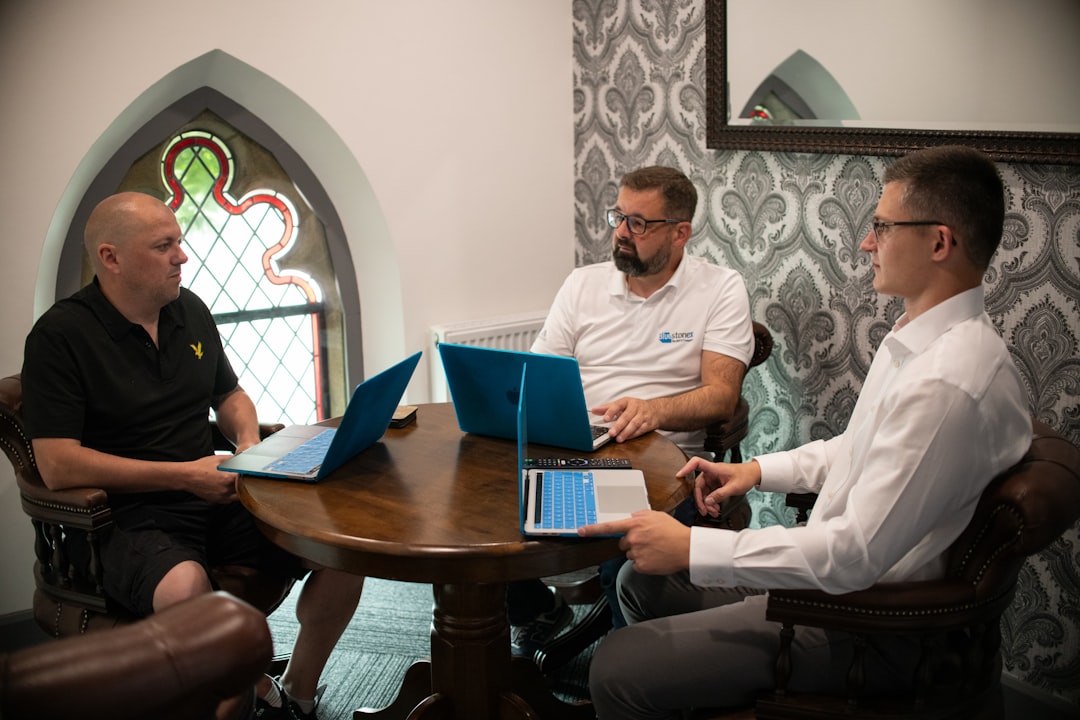
Featured image by Bluestonex on Unsplash.